

Why Modi government ignored Iranian human chains
Gandhi had no opportunity to plan a non-violent resistance to the Japanese invasion, but he was clear about his course of action
Why Modi government ignored Iranian human chains
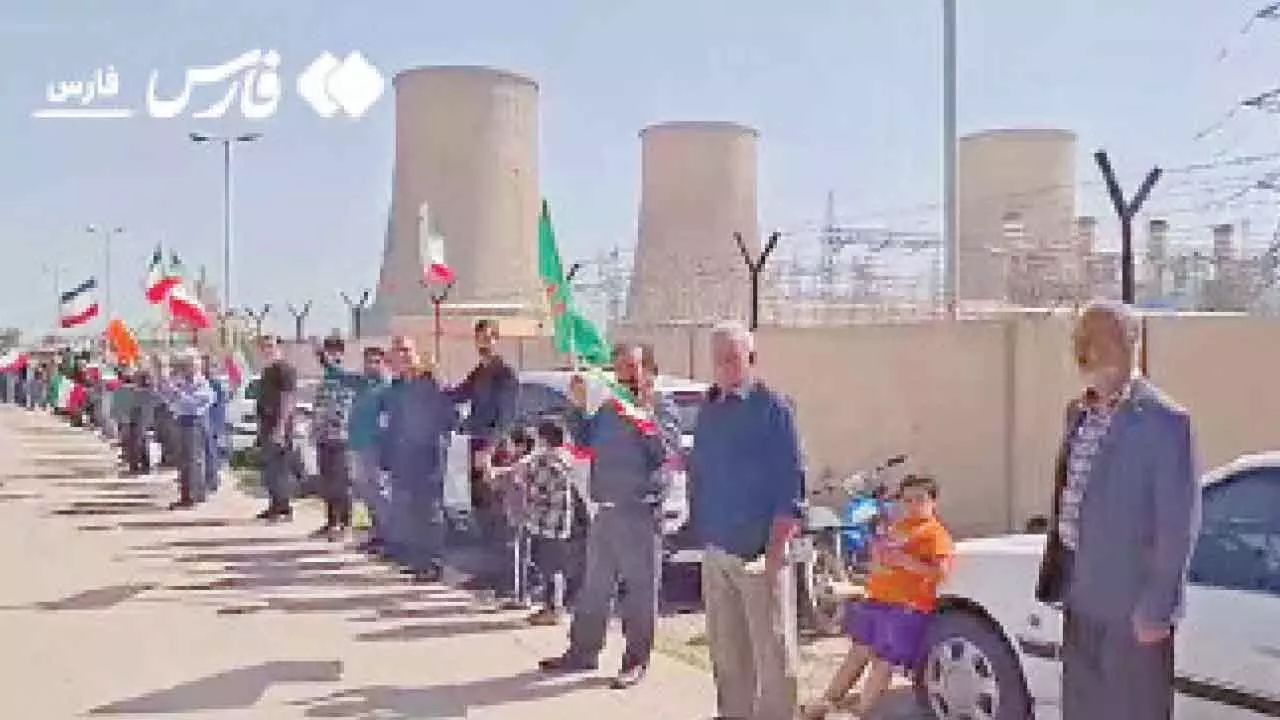
The Iranians forming a human chain against Trump’s death threat to its civilization could not thrill Indians, is a sign of stunted nationalism. The great event did not inspire any good editorial, nor did it prompt any response from the publicity-happy Modi Government. Was it an innocent mistake, or an ideological paralysis? Maybe it's a part of strategic silence, Prime Minister Modi is maintaining over the US-Israel attack on Iran.
Indeed, the silence is selective. When the US and Israel assassinate the Supreme Leader of Iran, or they kill the school girls of Minab, there is a deafening silence. But when Bahrain is bombed, or the Strait of Hormuz is closed, the government stands to condemn Iran. Ignoring the great gatherings around the power plants, on the bridge, and by the river must be deliberate and calculated. This is to disown Gandhi’s philosophy of Satyagraha.
Indians have the responsibility to own it, not for pride, but to display a genuine faith in the Gandhian ideas. And, it is well known that the Modi regime has no attachment to it. Rather, it has a deep-seated abhorrence of these ideas. It has been putting all its strength into annihilating the philosophy of truth and non-violence since it took over. But what about the detractors of the RSS’s ideology? They also largely abstained and could not see the relevance of Satyagraha in a devastating war.
Iranians’ rising to protect their infrastructures, the lifeline, non-violently, is a great departure from the practice of forming a human chain to show solidarity or protesting against some injustice. It was much beyond it, and reminds us of Gandhi’s unwavering faith in non-violence. He did not hesitate to express himself in the middle of a deadly World War.
The leadership of Iran might not have articulated the event of human chains with a similar goal and commitment, but it has a contextual similarity. The US and Israel had started the war to free the Iranian people from a vicious regime. Trump had called on the people to change the government for a better future.
“Iran is the world's number one state sponsor of terror, and just recently killed tens of thousands of its own citizens on the street as they protested,” he had said while announcing the attack.
Japan was using the same rhetoric while attacking British India during World War II. Gandhi wrote an open letter to the Japanese people saying that they need not worry about India’s freedom.
“Our movement demanding the withdrawal of the British Power from India should in no way be misunderstood. In fact, if we are to believe your reported anxiety for the independence of India, a recognition of that independence by Britain should leave you no excuse for any attack on India. Moreover, the reported profession sorts ill with your ruthless aggression against China. I would ask you to make no mistake about the fact that you will be sadly disillusioned if you believe that you will receive a willing welcome from India,” he said in his letter.
Gandhi had no opportunity to plan a non-violent resistance to the Japanese invasion, but he was clear about his course of action.
Iranians took a historic path. Iran is resisting the attack militarily. It is also recruiting soldiers and training them. Is it not a great departure when it calls people to form human chains, and is not appealing to them to arm themselves?
The innovative way of protesting against a deadly attack may not have immediate ideological implications, but it provides a tool to the common people to protest against war. It will certainly add to the civilizational maturity. Was it not the best way to counter the savagery of the US and Israel? Iranians’ resorting to the Gandhian tool must delight us. It must deepen our faith in Gandhian philosophy. However, we see a contradictory response from the Indian government. The philosophy of Hindutva inspires its response.
These incidents only make it clearer that the philosophy of Hindutva does not carry conviction for the larger goal of good for humanity. Prime Minister Narendra Modi’s visit to Israel to pledge his all-out support to the Netanyahu regime just before the attack hardly makes any sense. Was it a result of policy paralysis or a well-thought-out strategy? The choice may have given some business gains to some industrialists, but it is suicidal for Indian diplomacy.
The logic of economic and defence benefits from our ties to Israel and the pro-US Gulf countries is flawed. If economic strategic interests are the guiding principles for diplomacy, Iran offers much more than any country in South Asia can. Hindutva's inclination towards Israel has other dimensions. It has been comfortable with those who serve the colonial interests and their proxies.
If Israel is the best collaborator of US imperialism, the Gulf countries are its subservient allies. Is it not beyond imagination for us to find a civilizational ally in Israel? The country emerged from the British colonial project to rule the Middle East by proxy. The same is true for most of the Gulf nations.
The British rulers did the same in India by creating Pakistan. Pakistan may chant the slogan of Muslim unity, but it serves the interests of the USA. There is an axis of Saudi Arabia, Pakistan and the USA. Its antagonism with India drives China to support Pakistan. How can India gain from joining the imperialistic axis of the US, Israel and the GCC (Gulf Cooperation Council) countries?
If we decode the foreign policy of the Modi government, it becomes clear that it has nothing to do with the economic or strategic interests. The ideological inclinations drive Modi’s policy. The same is the case with the Modi regime’s response to the great event of Iranians in human chains. It can celebrate a Hindu temple in Abu Dhabi, but ignores human chains across Iran. It is consonant with its ideology.
(The author is a senior journalist. He has experience of working with leading newspapers and electronic media including Deccan Herald, Sunday Guardian, Navbharat Times and Dainik Bhaskar. He writes on politics, society, environment and economy)





